
Create a CEG Account  /  CEG Login
☰


Cat Skeleton Buckets Feature Heavy Duty Construction, Design Elements

- National Edition
Caterpillar

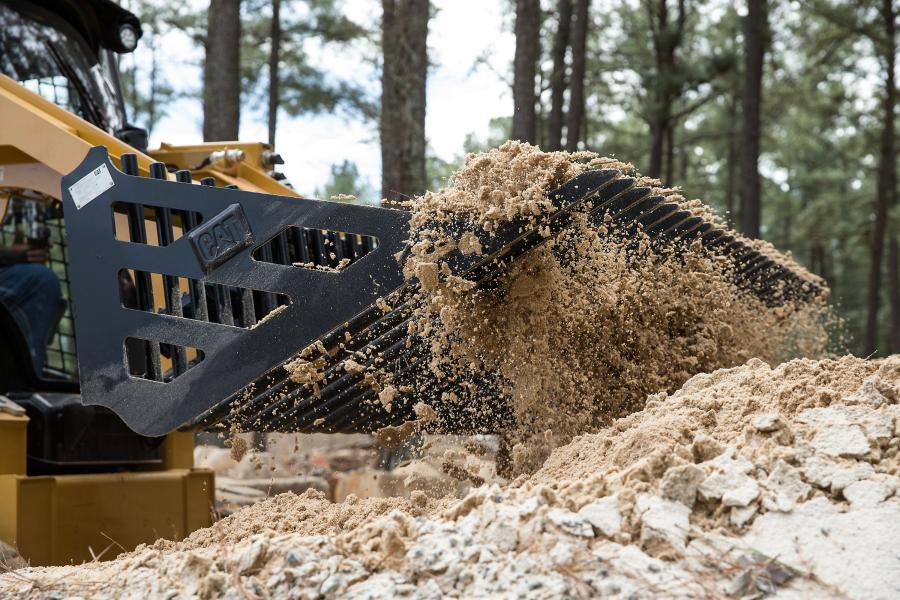
Used primarily to separate rocks and large debris from soil and sand, Cat skeleton buckets feature heavy duty construction and find application in a number of industries, including agriculture, construction, land clearing, demolition, landscaping, and scrap handling.

 Welded to the forward tips of the rods and support beam are heavy steel tines that enhance breakout force by initially separating rock and debris from soil more effectively than could a solid cutting edge. Designed for use with skid steer loaders, multi-terrain loaders, compact track loaders, and compact wheel loaders, Cat skeleton buckets incorporate a number of structural elements that ensure efficient operation and long-term durability.

Used primarily to separate rocks and large debris from soil and sand, Cat skeleton buckets feature heavy duty construction and find application in a number of industries, including agriculture, construction, land clearing, demolition, landscaping, and scrap handling. Designed for use with skid steer loaders, multi-terrain loaders, compact track loaders, and compact wheel loaders, Cat skeleton buckets incorporate a number of structural elements that ensure efficient operation and long-term durability.

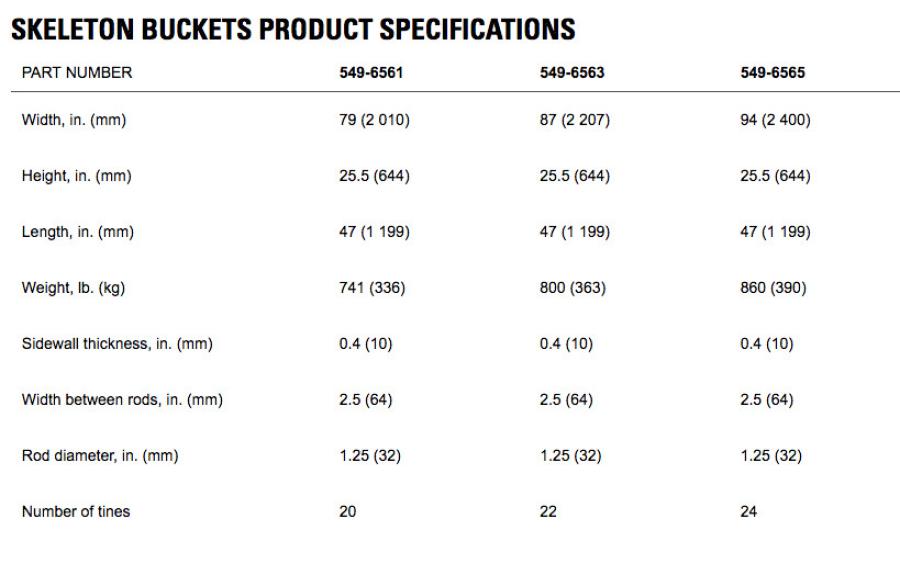
In basic construction, Cat skeleton buckets use heavy steel rods, 1.25 in. (3.1 cm) in diameter on 3.75-in. (9.5-cm) centers, to form the floor and back of the bucket. Thick plates with rectangular openings form the sides of the bucket, and a rectangular frame, fabricated of heavy duty steel and incorporating two steel plate rock dams, strengthens the back of the bucket. The rock dams serve to retain material, reducing spillage and increasing production.

For added durability, steel gussets are welded between the outermost rods in the bucket floor and the sides of the bucket. The forward ends of the rods in the bucket floor are secured in a heavy-duty support beam positioned between (and welded to) the bucket sides. This beam not only provides support, but allows the bucket to also be used for grading. Welded to the forward tips of the rods and support beam are heavy steel tines that enhance breakout force by initially separating rock and debris from soil more effectively than could a solid cutting edge.

For more information, visit www.cat.com.


Today's top stories

Crews Tame Virginia's Mountainous Roadway

VIDEO: Earthborne Celebrates 50 Years of Family, Service, Growth

Albanese D&S Takes On Deep Lowell Excavation Job

RPI Unveils New Facility to Support Growth, Strong Future

AEM Tour Honors Rockland Manufacturing's Workforce

United Demo Day Showcases New John Deere Excavators

CTLs vs. Skid Steers vs. Compact Wheel Loaders

Metso's New 4-MW Extra-Large Test Rig


×

Stay Ahead of the Market

Get weekly equipment news, auction updates, and dealer insights — trusted by thousands of industry professionals.