Create a CEG Account  /  CEG Login


Looking Back: Historical Cranes

- National Edition #9
HCEA

The HCEA provides a lookback at cranes from the past.

The Historical Construction Equipment Association (HCEA) is a 501(c)3 non-profit organization dedicated to preserving for public education the history of the construction, dredging and surface mining equipment industries.

This story also appears on Crane Equipment Guide.
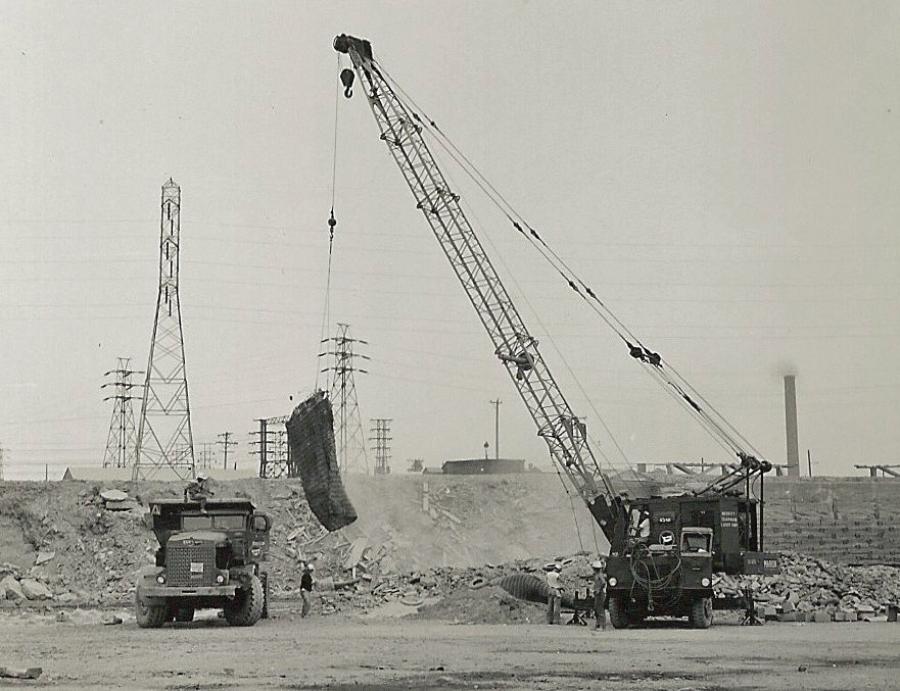
Photo: 1/6
Photo: 1/6
Photo: 1/6
Photo: 1/6
Photo: 1/6
Photo: 1/6

On Aug. 15, 1959, Merritt-Chapman & Scott used a Marion 43-M truck crane to pick a blasting mat during construction of the Niagara Power Project. The hauler is one of approximately 120 R22 and R27 Euclids and PH95 Payhaulers M-C&S massed to handle nearly 17,000,000 yds. of rock excavation on two contracts to construct the power plant, intake structure and two conduits. The mat is placed over a small blast to contain debris.
(Marion Power Shovel Company image, HCEA Archives)
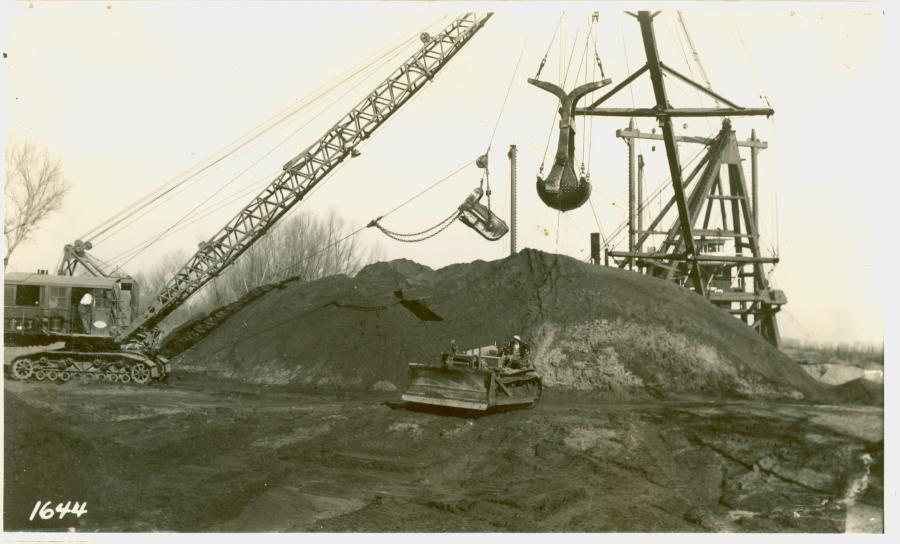
The machine that R. G. LeTourneau’s photographer intended to highlight in this mid-1930s image is the straight dozer on what appears to be a Best or Cat Sixty, but it provides a beautiful contrast between a P & H dragline and a clamshell dredge. Dredges of this type were used extensively in levee construction in northern and central California. 
(R. G. LeTourneau, Inc. photograph, Maier-Daily Papers,  HCEA Archives)
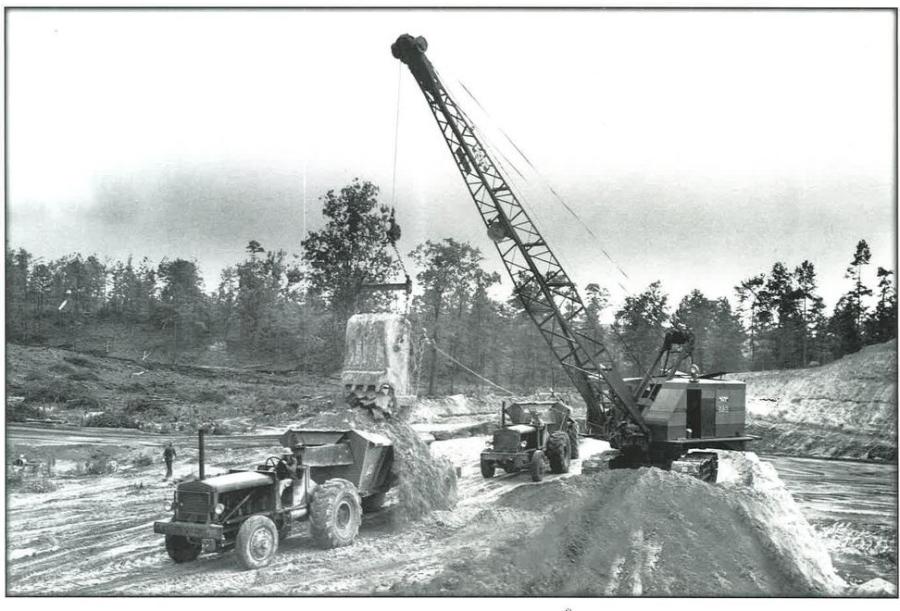
Swinging a 3 cu. yd. bucket, this Bucyrus-Erie 54B dragline heap loads a fleet of Euclid FDT bottom dumps. The 54B was the largest B-E machine of its era that was manually operated. 
(Euclid Road Machinery Co. collection, HCEA Archive)
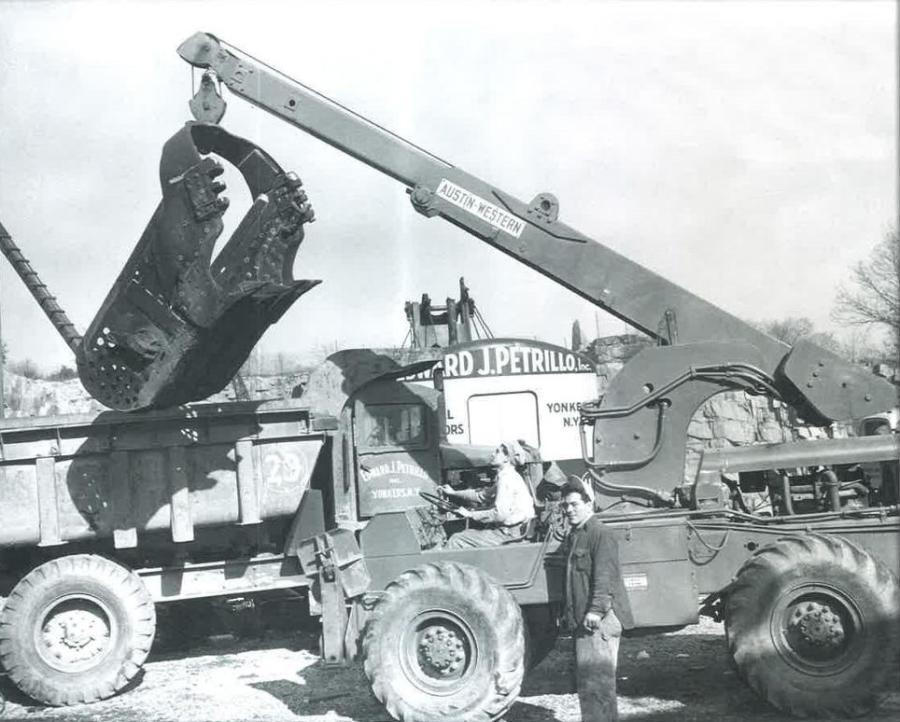
This dragline bucket is getting a lift into a Euclid end dump for a trip to the shop. An early Austin-Western crane does the honors in this shot taken in 1957 at Edward J. Petrillo Inc.’s yard in Yonkers, N.Y. 
(Austin-Western Road Machinery Company collection, HCEA Archives)
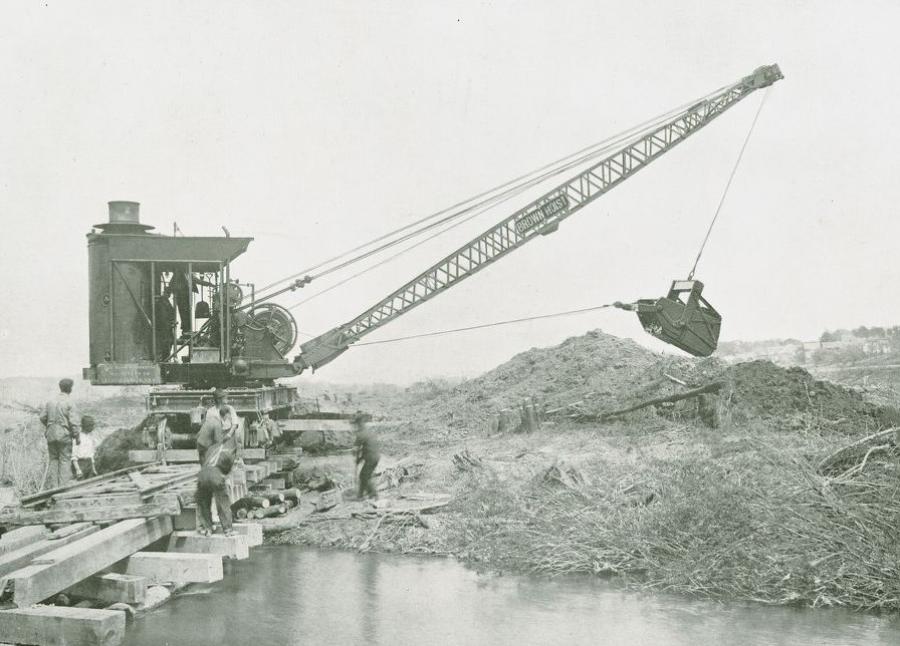
Dragline service was not a common application for locomotive cranes. This Brownhoist No. 4 wields a 1-yd. Schnable bucket. This bucket consisted of a pivoting shell inside a fixed frame, and it dumped out its back end by releasing the tension of the drag line, causing the back of the shell to drop away from the back gate of the frame while pivoting at the front of the frame. After dumping, the shell returned to its horizontal digging position, with the back gate blocking the open back end of the shell. 
(Brown Hoisting Machinery Company catalog, 1919, Donald W. Frantz Collection, HCEA Archives)
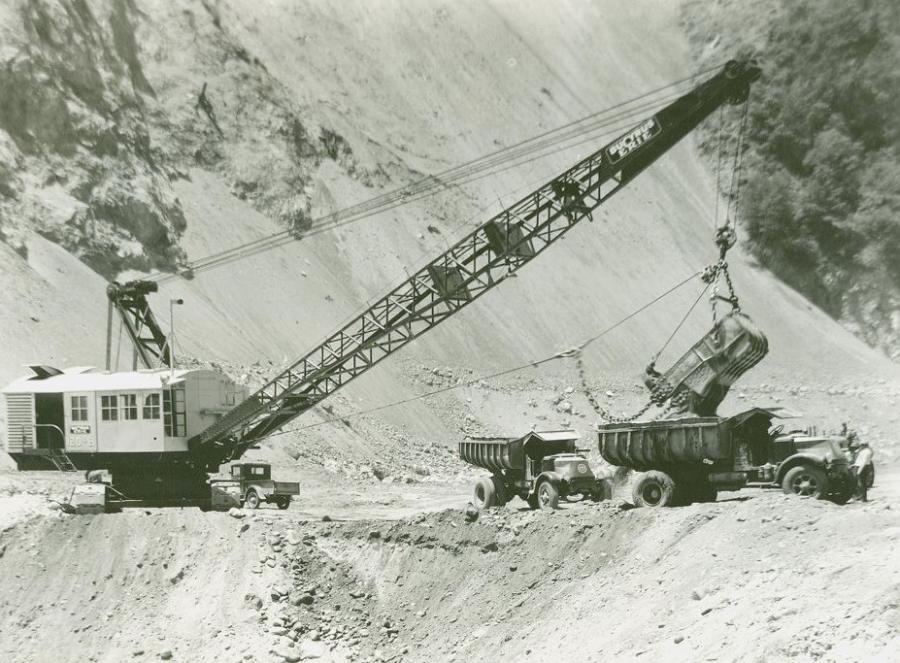
A Bucyrus-Erie 120B electric dragline loads a Mack Super Duty AP truck during construction of San Gabriel Dam north of Azusa, Calif., circa 1933. Built by the West Slope Construction Company joint venture, this was the world’s largest rockfill dam when completed in 1937. 
(Bucyrus-Erie Company photograph)


Today's top stories

Wadsworth Brothers Targets Year-End Completion of UDOT's I-15 Shepard Lane Interchange

DEVELON Introduces DEF-Free Compact Track Loaders

Komatsu Partners With AIM Intelligent Machines for Autonomous Machine Operation

Work Begins On $141M Weld Energy Center in Colorado

VIDEO: WM 'Landfill of the Future' Advances Toward Autonomous Equipment Testing

Johnson Crane Hire Celebrates 50th Anniversary With MMS and Tadano, Raise Funds for Hope Haven Home

Gov. Hochul Announces Completion of $161M Rehab Project

Western Global Introduces FirePro Fuel Storage Solution


×

Stay Ahead of the Market

Get weekly equipment news, auction updates, and dealer insights — trusted by thousands of industry professionals.