

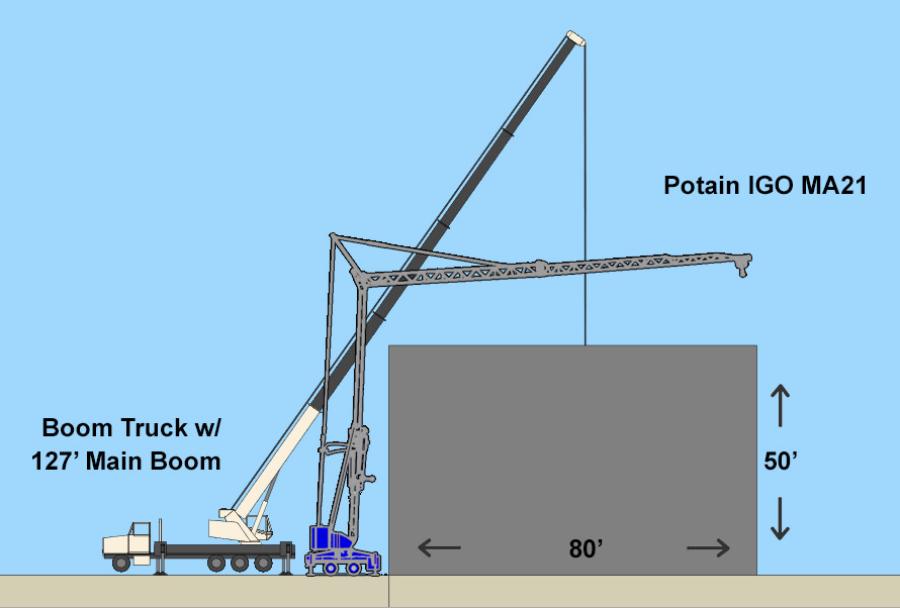
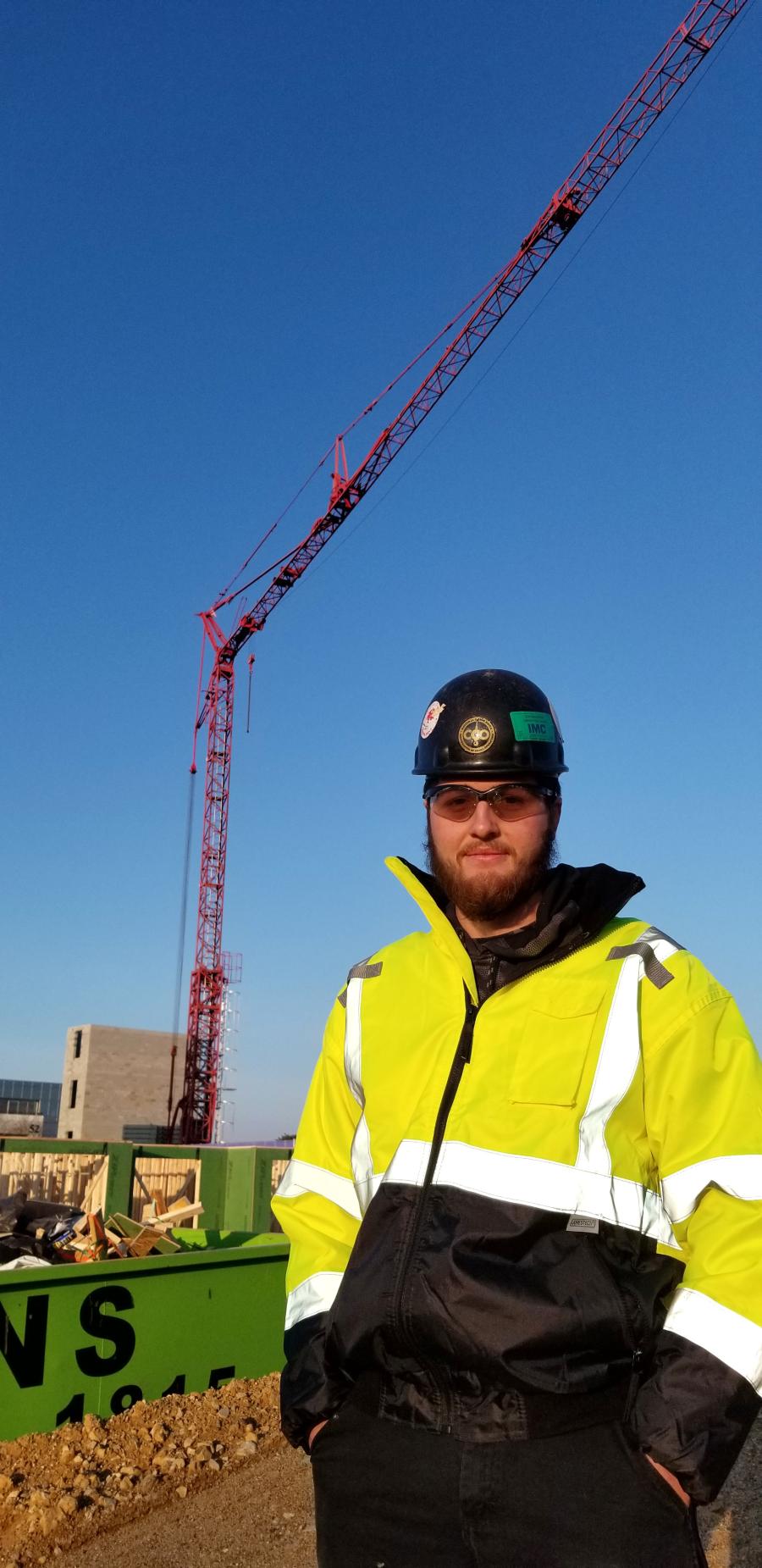
Potain self-erecting tower cranes are a mainstay of the global construction industry and now are taking hold in the building market in North America. These cranes offer significant cost savings and advantages for hoisting and material handling in all stages of the building process when compared to the conventional equipment in use today here in the United States, according to Stephenson Equipment.
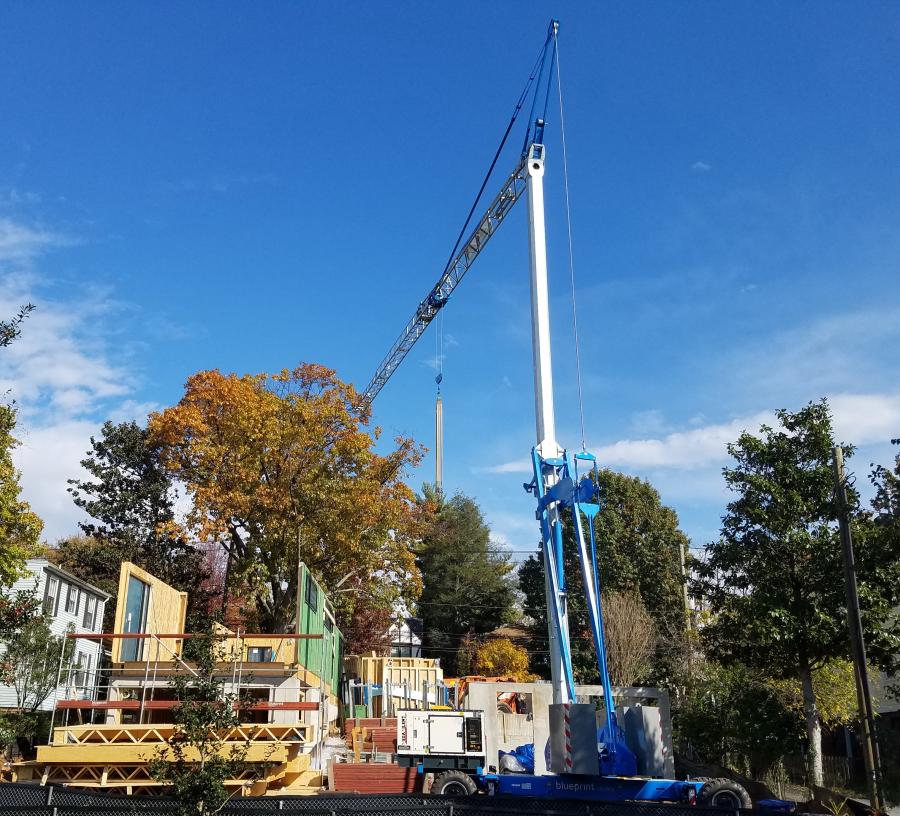
On a job site near King of Prussia, Pa., MK Builders had two of its Potain self-erecting cranes in use. Leon King, site foreman, estimated that using self-erecting towers have improved the companies building efficiency by 50 percent.
"We used our first self-erecting tower crane in 2014 and after just one day we realized we need to incorporate these towers into our building process," King said.
Become More Efficient
Builders like MK have found a more efficient way to build using self-erecting tower cranes, by:
- Reducing number of framers required
- Eliminating need for rough terrain forklifts and tow motors
- Eliminating need for hydraulic crane for truss work
- Reducing the number of laborers handling materials
- Working on tighter job sites
- Eliminating a pump truck for columns, footings, and walls
- Saving time with quick and easy set-up
All of these efficiencies equal tens of thousands of dollars per job.
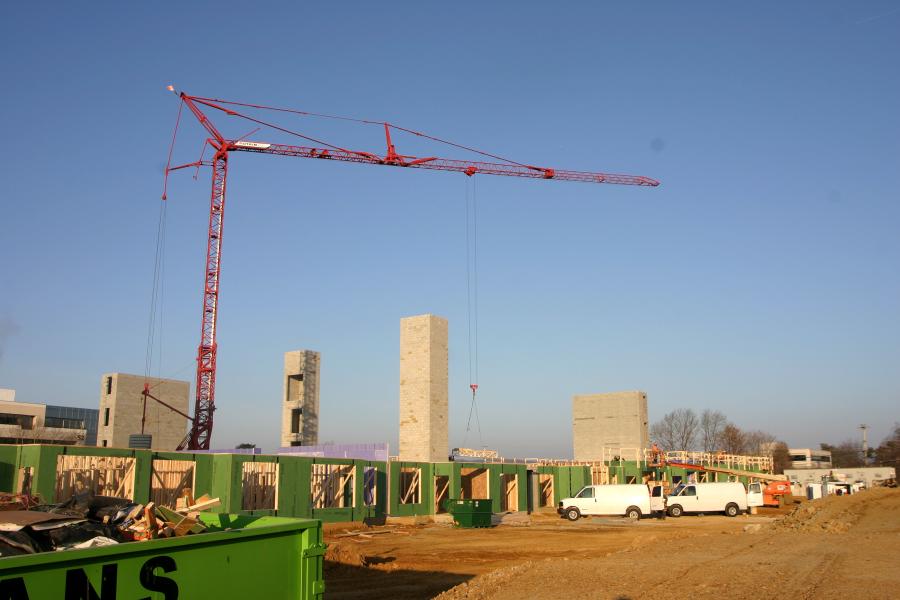
John Macik, building site manager of Easley and Rivers, Monroeville, Pa., said, "On this job [a health care facility near Pittsburgh, Pa.] the first floor took us 2-1/2 months to complete without the tower cranes on the project. Now, with them in use, we are constructing a complete floor in just one month.
"With expenses in mind we wanted to compare costs with the self-erecting tower crane and without, constructing the first floor without the cranes. We have learned our lesson and realized we should have had the cranes on the job from day one. They make a job site safer: saving injuries, saving labor. It is the way to go today.

"[Self-erecting tower cranes] set up so quickly compared to conventional tower cranes. These get on-site and in operation in less than two days. We just needed to prepare a 20 ft. by 20 ft. compacted pad area for the T130 we have on-site. It can be set in close proximity and the reach is great across the project."
Remote Control Operation
"The remote control operation of these cranes is awesome, it allows us to operate more efficiently and with less personnel. The remote makes these cranes even more the way to go," said Macik. MK Builders' King agreed, adding "the crane operator can rig several panels himself, pick and move them and unload in steps. Our operators have now become very efficient.
"On this job site right now, our one tower crane operator with the remote is keeping 37 framers busy with panels as a one man crew," King said.
At times, the operator may use a rigger on the ground to assist and rig while the operator is using the remote up on the deck setting loads of panels for the framers, King added.
The Future is Here: Self-Propelled Self-Erecting Tower Cranes
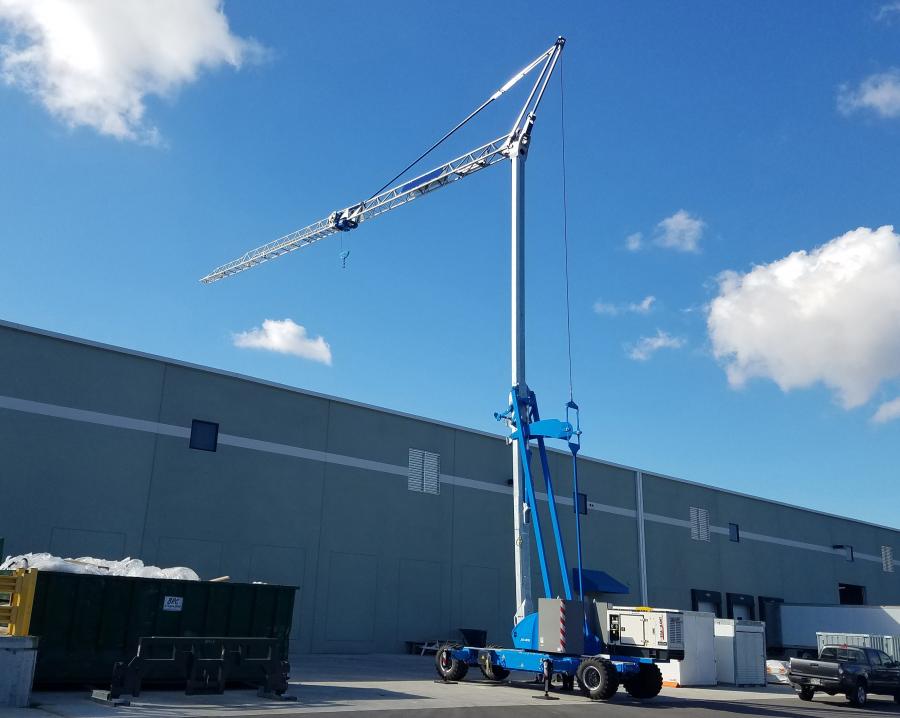
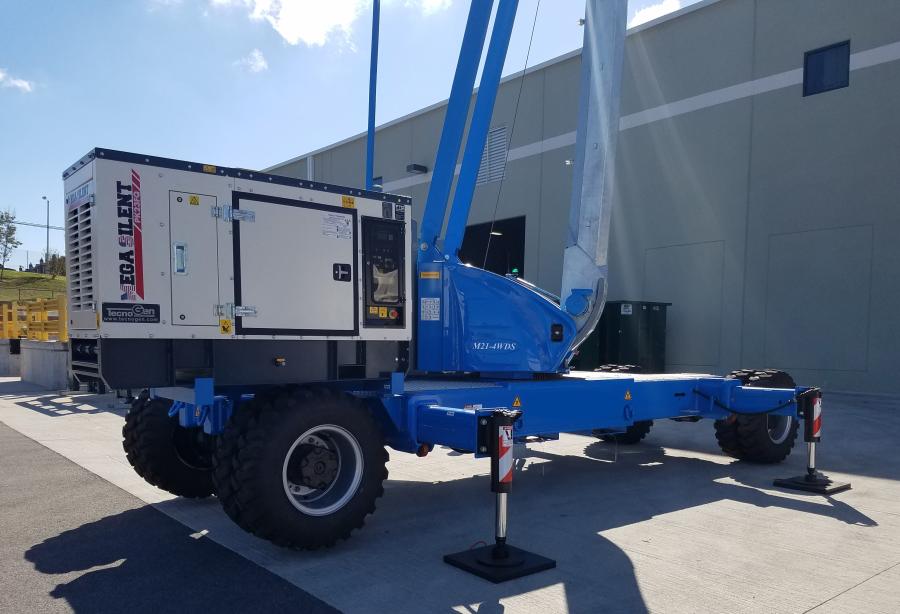
The Montalift M21-4WDS is a Potain IGO MA21 mounted on a 4WD chassis that runs off of its own generator. Users can maneuver around the job site with 4-wheel drive and 4-wheel steer capabilities all while the tower remains set-up. No more setting up with a truck and trailer.
- Driving and steering via tethered control unit with push buttons
- Electro-mechanical four-wheel drive with 2 speeds and four-wheel steer
- Can be driven fully erected (on flat, with no load)
- Heavy duty axles with planetary hub reduction and dual 9.00 x 20 off-road tires
- Four extendable hydraulic outriggers with a base of 13.1 x 13.1 ft.
- Power supply: Onboard 23kVA soundproof genset, or customer supplied 480 V "city power"
- Transport dimensions: (l x w x h) 39.6 by 9.1 by 10.1 ft., total weight 49,384 lb.
For more information, call Stephenson Equipment at 800/325-6455 or visit www.stephensonequipment.com.