Create a CEG Account  /  CEG Login


Paving Through the Decades

- Southeast Edition #6
HCEA

Working to preserve the history of the construction equipment that shaped our world . . .

The Historical Construction Equipment Association (HCEA) is a non-profit organization dedicated to preserving for public education the history of the construction, dredging and surface mining equipment industries.
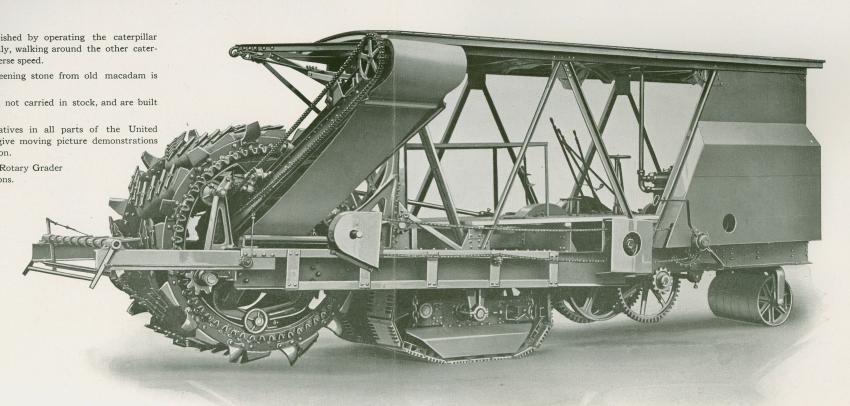
The Koehring rotary grader from the early 1920s is the indirect ancestor of today’s milling machines. Capable of loading 60 to 100 cu. yds. per hour, it could handle macadam pavement or dirt, and an optional screen could separate out aggregates from the macadam. The discharge conveyor could be set to either side of the cutting wheel, and cutting depth was two in. to two ft. It was steered by operating one crawler to pivot on the other.
The Koehring rotary grader from the early 1920s is the indirect ancestor of today’s milling machines. Capable of loading 60 to 100 cu. yds. per hour, it could handle macadam pavement or dirt, and an optional screen could separate out aggregates from the macadam. The discharge conveyor could be set to either side of the cutting wheel, and cutting depth was two in. to two ft. It was steered by operating one crawler to pivot on the other.  

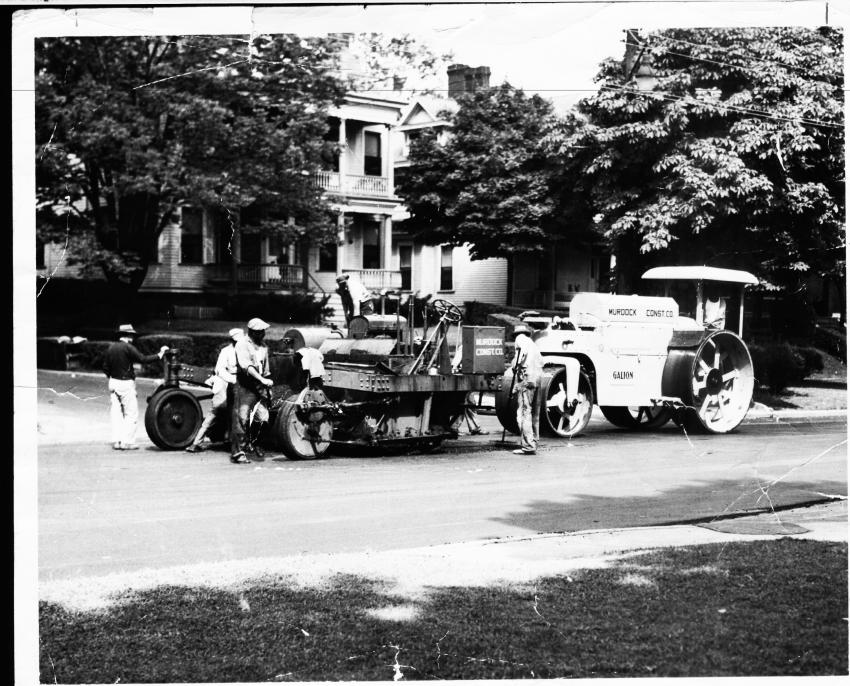
The Adnun paver with Galion three-wheel roller was a primitive asphalt paver that operated like an oversized spreader box.
The Adnun paver with Galion three-wheel roller was a primitive asphalt paver that operated like an oversized spreader box.  

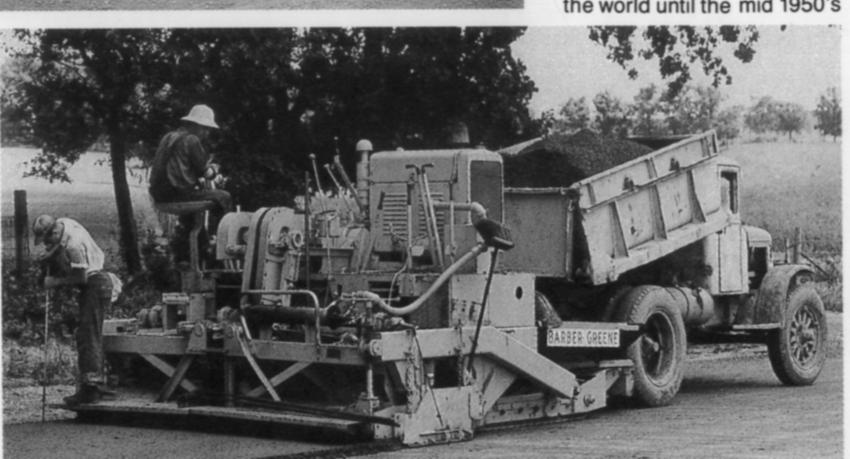
The Barber-Greene 879 paver was one of the first successful asphalt pavers to work independently of forms, and it established the basic design for all such machines into the present day.  This is the second version, an 879-A.
The Barber-Greene 879 paver was one of the first successful asphalt pavers to work independently of forms, and it established the basic design for all such machines into the present day. This is the second version, an 879-A.  

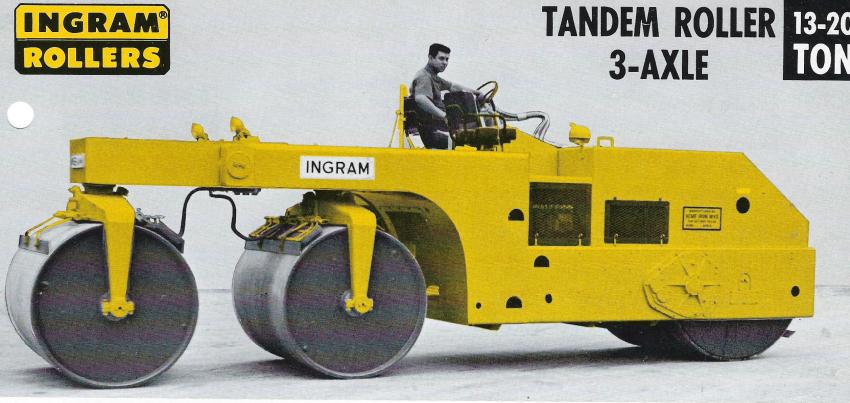
From the late 1940s into the 1960s, three-drum tandem rollers provided extra full-width compaction force in asphalt work.
From the late 1940s into the 1960s, three-drum tandem rollers provided extra full-width compaction force in asphalt work.  

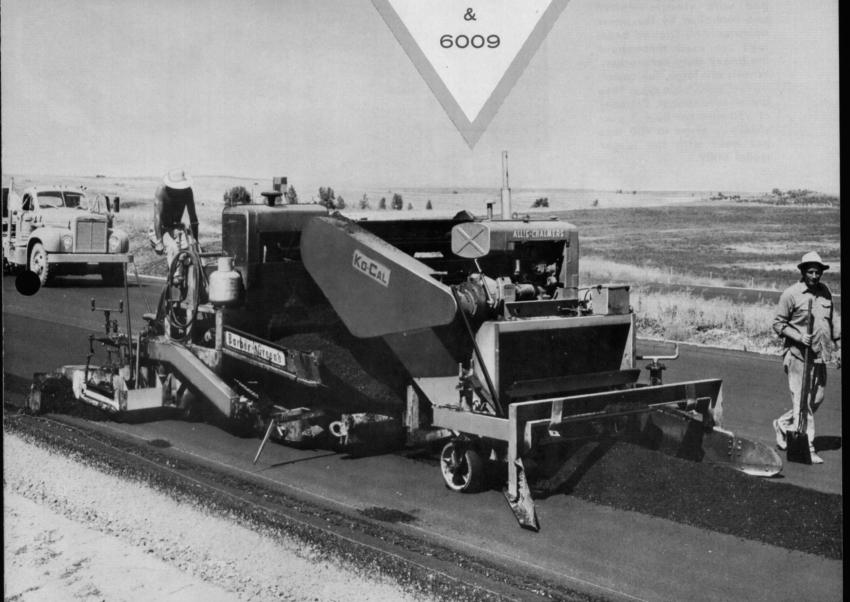
Working in material deposited by bottom dump trailers, a Ko-Cal windrow elevator charges a paver.

Working in material deposited by bottom dump trailers, a Ko-Cal windrow elevator charges a paver.  


Today's top stories

SAKAI Marks 50 Years in North America, 25 Years in Georgia

Illinois' $400M WaterLink Project Begins

Single Interconnected Ecosystem: Physical, Digital Infrastructure Overlap Muddies Concept of Lone Assets, Individual Issues

AEDF's Indianapolis Event Connects 300 Students to Industry

Royals Select Construction Team for New Ballpark District

Foley Equipment Launches Cat Compact at Wichita Campus

Major Mississippi Highway, Bridge Projects Advance

Final Beam Marks Milestone for Guitar-Shaped Terminal


×

Stay Ahead of the Market

Get weekly equipment news, auction updates, and dealer insights — trusted by thousands of industry professionals.